
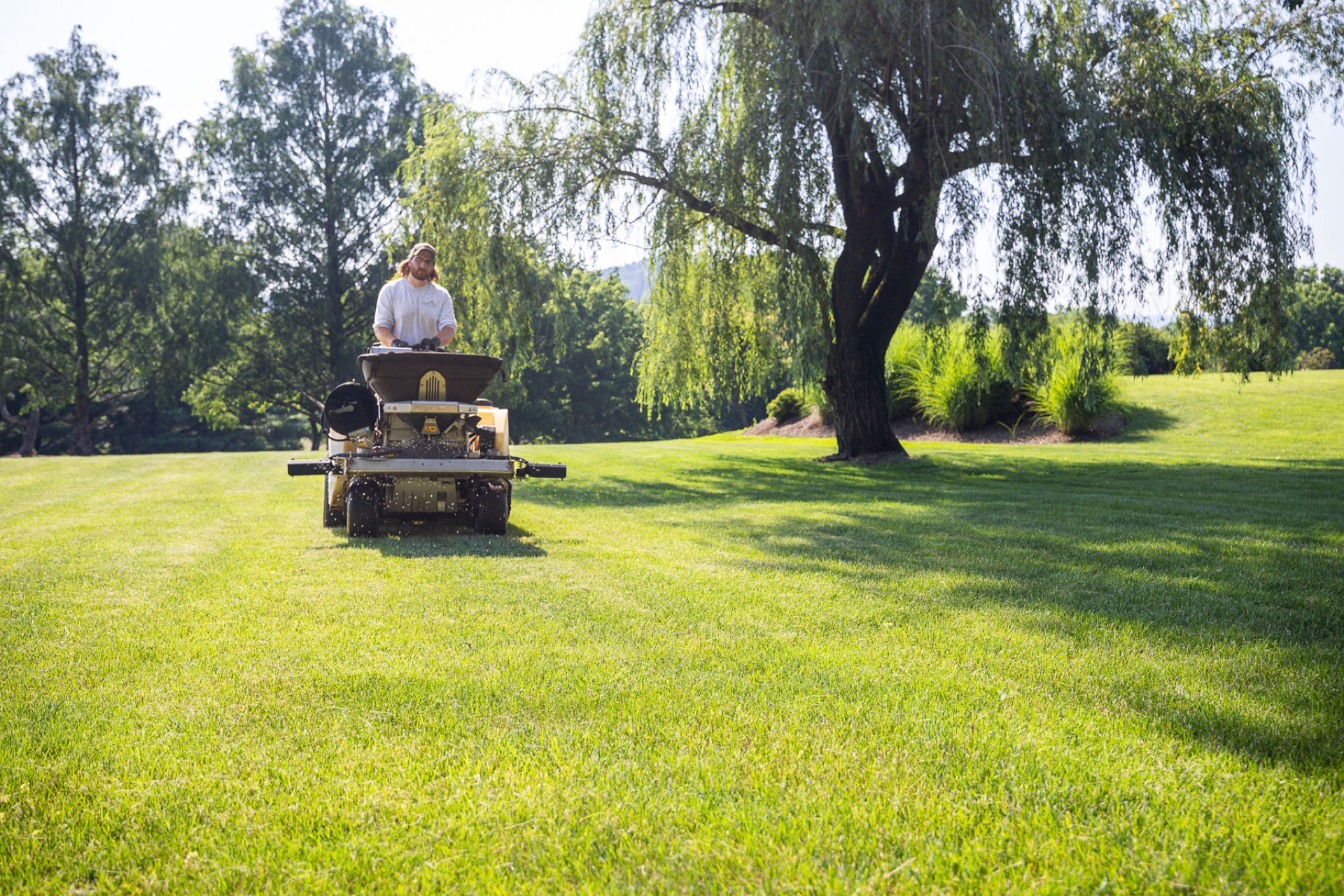
Is your lawn as green and healthy as it could be?
When it comes to a lush, thriving lawn, fertilization matters, but it’s not just about which products you use. It’s also about timing. Fertilizing at the right moments, in the right order, is what separates a lawn that thrives from one that never quite fills in.
In this article, we’ll walk through when to fertilize a South Central Pennsylvania lawn, why the timing matters as much as the product, and the common mistakes that trip up homeowners who go it alone.
Jump to:
- Why fertilizer timing matters more than most homeowners think
- When to fertilize Pennsylvania lawns throughout the year
- Common fertilizing mistakes homeowners make
- Why use a professional lawn fertilization program
- FAQs about fertilizing lawns in Pennsylvania
- Choosing lawn care in South Central Pennsylvania
Why Fertilizer Timing Matters More Than Most Homeowners Think
The timing of a fertilizer application can be the difference between a lawn that’s thriving and one that’s struggling.
A lot of homeowners fertilize once at the start of the season with good intentions, then lose track of it as spring turns into summer. That’s the real value of a professional program: it takes the guesswork, and the remembering, off your plate.
Fertilizer’s job is to feed the lawn. But nutrients applied at the wrong time can be wasted, or worse, do damage. Start too early and cold soil won’t absorb the nutrients. Push too hard in the heat and you risk burning the turf. Each season’s application serves a different purpose, and they all pull their weight.
When to Fertilize Pennsylvania Lawns Throughout the Year
There are four times of year when a South Central PA lawn benefits most from fertilization: early spring, late spring, late summer, and fall. Here’s what each one does.

Early Spring
Early spring fertilization is a wake-up call for the lawn and helps drive that first green-up of the season. It isn’t the only reason lawns green up early (fall fertilization plays a big role too, more on that below), but it gets the growing season off to a strong start.
Timing matters here. Put fertilizer down too early, while the ground is still cold, and the roots can’t take up the nutrients. A good provider watches soil temperatures rather than the calendar to decide when to make that first application.
Late Spring
By late spring the grass is growing actively and using up nutrients quickly. The purpose of fertilization shifts here, from waking the lawn up to supporting the growth that’s already underway.
This round also prepares the lawn to withstand the summer ahead. South Central PA summers can be hard on turf, with real stretches of heat and drought. A well-fed lawn heading into that stress holds up far better than one running on empty.
Late Summer
Fertilizing in the heat of summer is risky in Pennsylvania. High temperatures raise the chance of fertilizer burn, and lawns often slow down or go dormant to protect themselves. A lawn that isn’t actively growing won’t absorb much of what you put down anyway.
That’s why we usually wait until later in the summer for the next application. This round starts the process of repairing the lawn from summer stress and helps thicken it up before fall weeds try to move in. Knowing when our regional lawns are actually ready to be fed is a big part of why following a Pennsylvania fertilizer schedule pays off, and why summer fertilizer burn is one of the most common DIY mistakes we see.
Fall
This final round, sometimes called a “winterizer,” is arguably the most important, and it’s the one homeowners skip most often because they don’t realize the lawn still needs feeding that late in the year.
Fall fertilization sets the lawn up for a hard Pennsylvania winter. Just as important, the nutrients get stored in the roots over winter and fuel next year’s early green-up. As we mentioned, it’s actually the fall feeding that does the most for that early-season color.
Common Fertilizing Mistakes Homeowners Make
Because fertilizer is sold at every hardware and big-box store, plenty of homeowners take it on themselves. But there’s more to it than spreading some “weed and feed” and calling it done. The application rate, the timing, and how often you fertilize all factor in, and it’s easy to get one of them wrong.
Here are the mistakes we see most.
Applying the wrong amount
Getting the amount right is harder than it looks. Too much fertilizer can cause burn that kills the turf outright. Too little and you’ve spent the time and money without much to show for it. The amount your lawn needs also shifts with the seasons, so a rate that’s right in spring may be wrong in late summer.
Applying the product unevenly
Even coverage is harder to achieve by hand than most people expect. Uneven application leads to overdosing in some spots (and the burn that comes with it) and underfeeding in others. Consistent results come from a properly calibrated spreader, not a handful tossed across the yard.
Using the wrong product
Many homeowners reach for all-in-one products like “weed and feed” that promise to handle weeds and feeding in one pass. They tend to underperform compared to what a professional uses. Not all fertilizers are built the same, and the right one depends on your grass type, the season, and what your lawn actually needs.
Why Use a Professional Lawn Fertilization Program
Handing fertilization to a professional does two things: it takes the risk of these mistakes off your shoulders, and it gives you your weekends back.
And it’s not just the time spent applying the product. It’s the trips to the store, the research into rates and timing, and the second-guessing about whether you got it right. A professional program folds all of that into a schedule built for our region, so you can stop thinking about it.
To be clear, fertilization isn’t a magic fix, and no honest lawn care company will tell you it is. What it does is give your lawn steady, well-timed nutrition so it can grow thick, stay healthy, and stand up to the stresses of a South Central PA year.
FAQs About Fertilizing Lawns in Pennsylvania
When should you fertilize your lawn in Pennsylvania?
Fertilize throughout the growing season, from early spring through fall. We target four optimal windows across those seasons so the lawn gets the full range of benefits.
What month is best for applying lawn fertilizer in South Central PA?
There isn’t a single “best” month. Fertilizer is valuable throughout the growing season, and each application serves a different purpose. The more common mistake is not fertilizing often enough to get the full benefit.
Can you fertilize your lawn too often?
Yes. Over-fertilizing can cause turf burn. It usually happens when homeowners fertilize too frequently (this isn’t a “more is better” product), apply too much at once, or spread it unevenly so certain areas get a double dose.
Choosing Lawn Care in South Central Pennsylvania
If you want real results, professional lawn care is worth the investment, and lawn care goes well beyond fertilization. A good program looks at every layer of your yard and helps it stand up to pests, weeds, disease, and the weather swings we get here.
At Good’s, our basic lawn care program includes five visits across the year, and our comprehensive package adds services based on what your lawn actually needs. The idea is simple: a proactive, year-round approach prevents problems before they start and supports steady, consistent growth, rather than chasing quick fixes after something goes wrong.
If you’re in Lancaster, York, Dauphin, or the surrounding areas of South Central Pennsylvania and you’d like a fertilization plan built for your lawn, call Good’s today or request a free quote.