
What a Growth Regulator Does
Tree growth regulators are plant hormones that temporarily slow shoot extension. The energy the tree would have spent pushing new top growth gets redirected to the parts that need it more — feeder roots, food reserves, defense compounds, and stress recovery.
For a mature, established tree, that translates into:
- Slower shoot extension. Less aggressive top growth, smaller pruning bills, and a more natural-looking canopy on heavily pruned trees.
- Stronger root systems. More feeder root density in the upper soil profile, which improves water and nutrient uptake.
- Better drought tolerance. Treated trees recover faster from dry summers and recover more reliably from heat stress.
- Reduced pruning frequency. Especially valuable on trees under utility lines, near rooflines, or in tight residential plantings.

When We Use Growth Regulators
Growth regulators are not a routine treatment. We recommend them when one of these conditions is in play:
- Utility-line conflicts. Trees that constantly grow back into power lines benefit from slower vertical growth between pruning cycles.
- Drought-stressed mature trees. Especially older oaks, maples, and beech that struggle through hot, dry summers.
- Post-construction recovery. Trees damaged by grading, trenching, or compaction recover more reliably when energy is shifted to the roots.
- Structural balance. Heavy-canopied trees with weak attachments can be brought back into balance with reduced shoot extension.
- Restricted root zones. Trees in tight planting strips or surrounded by paving benefit from slower top growth that better matches what the limited root system can support.

Application & Timing
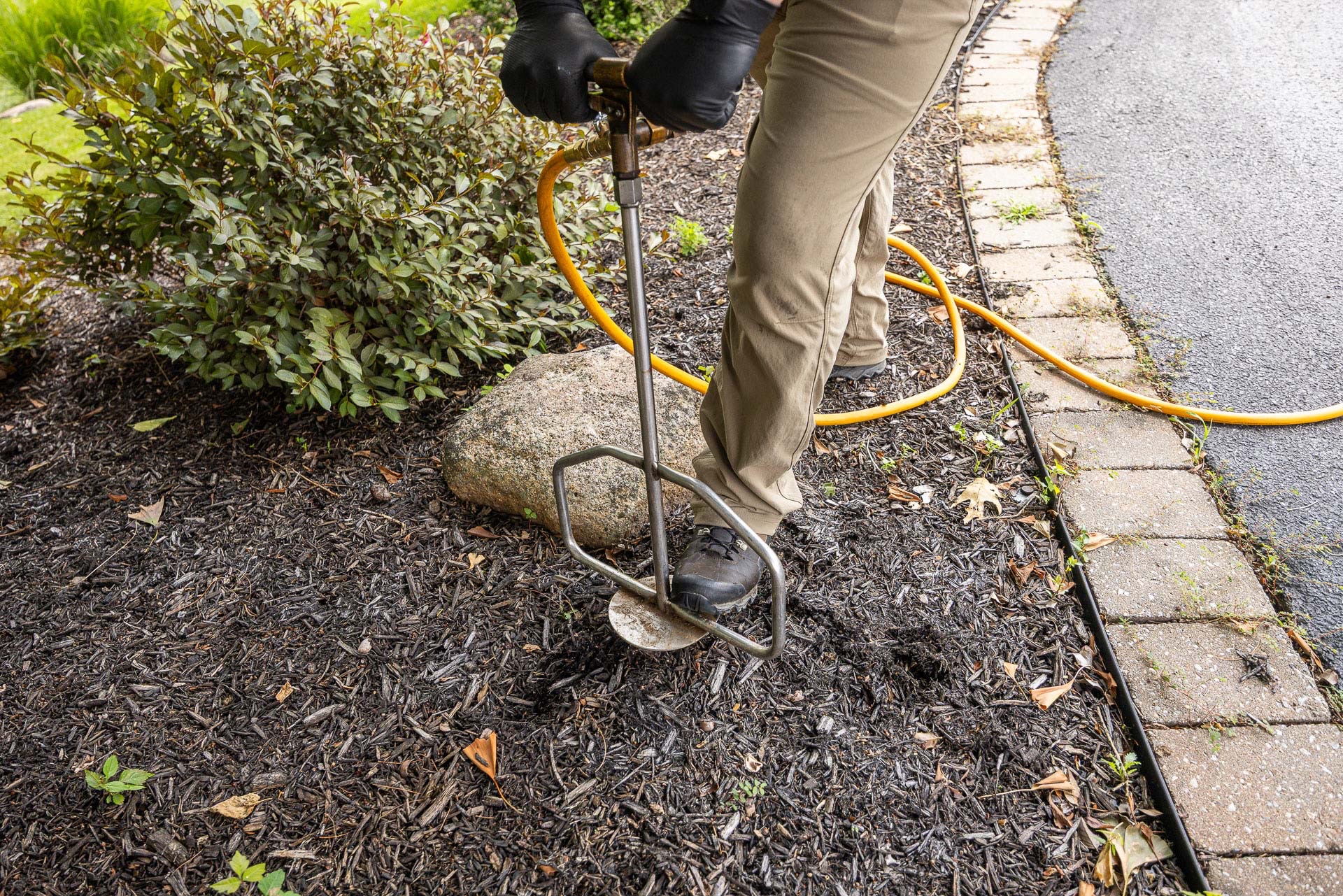
We apply growth regulators as a soil injection at the base of the tree, where the feeder roots can absorb the active ingredient and move it through the vascular system. The treatment is contained, low-impact, and doesn’t require any spraying overhead.
Timing is straightforward:
- Best window: early spring, after bud break but before the major flush of new growth.
- Treatment duration: a single soil injection typically lasts about three years.
- Pairing: growth regulators work well alongside fertilization, root air spading, and ongoing monitoring visits — your assigned arborist will recommend the right sequence for the tree.
Growth Regulators — Frequently Asked Questions
Is a growth regulator safe for my tree?
Yes — when applied by a trained arborist at the right rate. The active ingredients are well-studied, used widely in arboriculture, and approved for the species we treat. We don’t recommend them on young or newly transplanted trees that are still establishing.
How long do the results last?
A single soil injection typically lasts about three years before the tree returns to its previous growth rate. Most trees do well with a treatment every three to four years if the underlying conditions (drought, restricted roots, utility conflicts) are still present.
Can I still prune the tree?
Yes — and you’ll need less of it. Trees on a growth regulator program typically need pruning less often, with smaller cuts each cycle. The goal is fewer aggressive prunes, not zero pruning.
What species respond best?
Most common Central PA shade and ornamental trees respond well — including oak, maple, sycamore, beech, elm, and many flowering ornamentals. A few species don’t benefit much; your arborist will tell you upfront if your tree isn’t a good candidate.
Will my tree look smaller or unhealthy?
No. The tree continues to grow, just more slowly above ground. The canopy fills in normally, leaves stay full size, and most homeowners can’t visually tell a treated tree from an untreated one — they just notice it doesn’t need pruning as often.