.png?width=429&height=204&name=Goods%20Tree%20Care%20Logo%202%20(2).png)
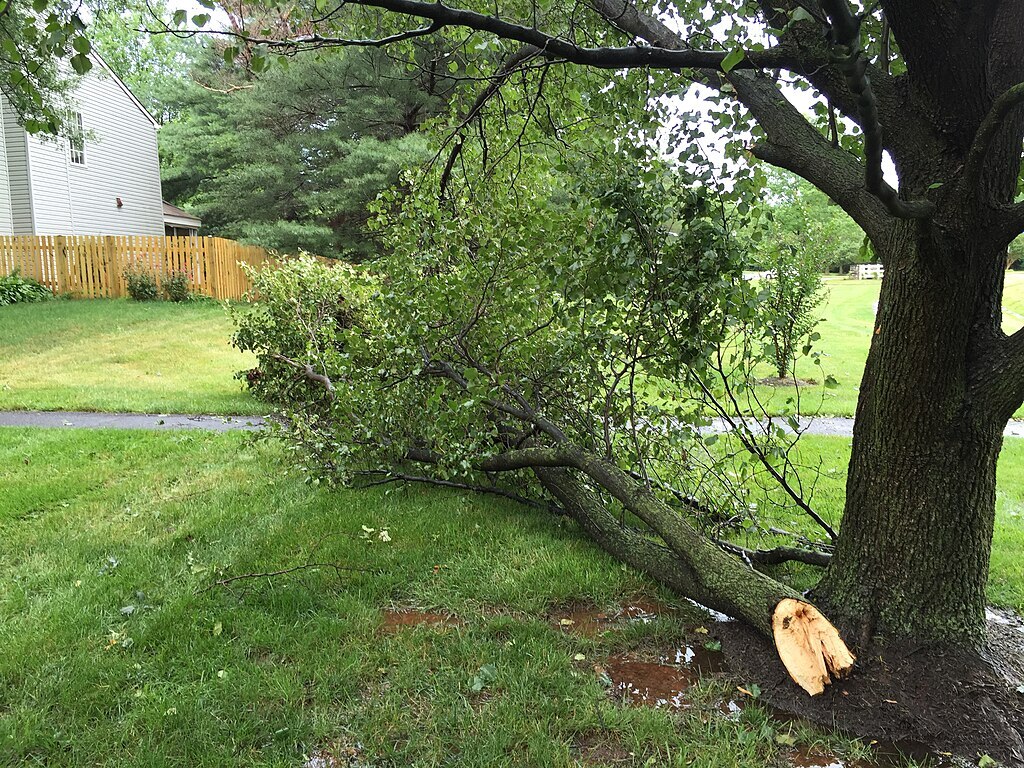

If a storm causes a tree on your property to crack under pressure, do you have a solid plan of action to take care of it?
Left alone, trees with storm damage can quickly grow into serious safety risks.
In South Central Pennsylvania, strong storms can move through quickly, so it’s important to have a plan in place in case your trees take a hit.
Let’s walk through how you should deal with storm damage to trees in your yard and talk about how you can boost your trees’ ability to weather future storms.
Jump to:
What to do if You Notice Storm Damage to a Tree
Common Signs of Severe Tree Damage from Storms
How to Tell if a Storm-Damaged Tree Can be Saved
How Proactive Tree Care Can Help Reduce Future Risks
FAQs About Handling Storm Damaged Trees
How Good’s Makes Caring for Storm-Damaged Trees Easy
What to do if You Notice Storm Damage to a Tree
If you do notice a tree with storm damage on your property, there are a few immediate steps you should take.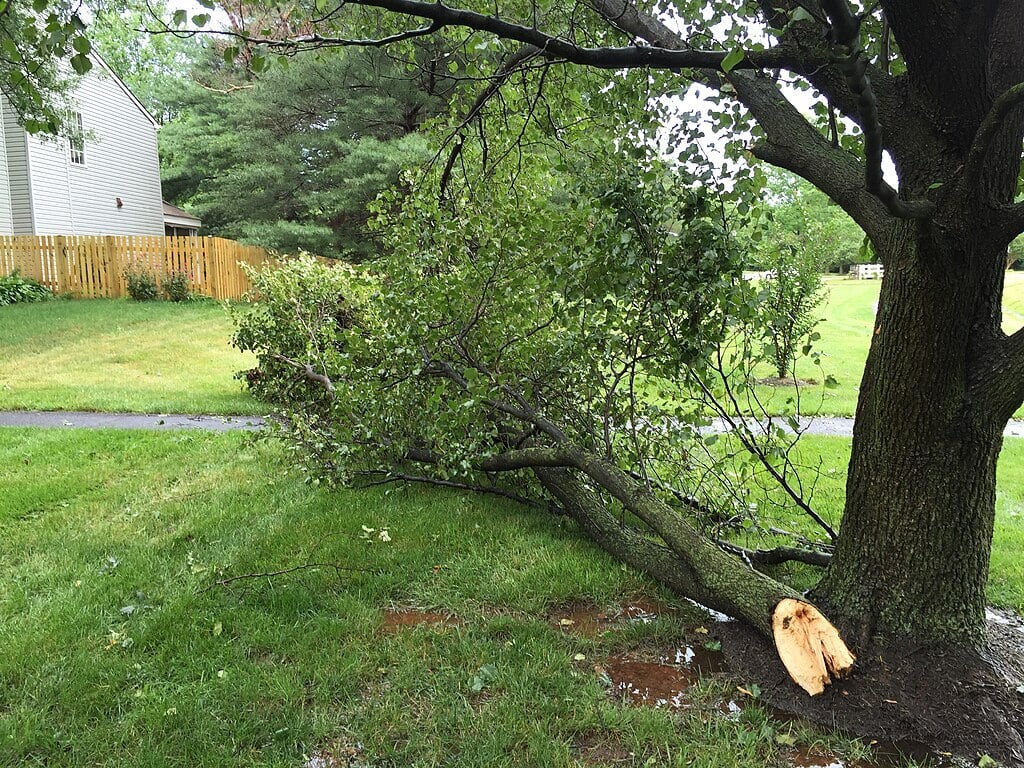
Exercise Caution
When dealing with storm and wind damage to trees, you should always use caution.
The biggest thing to be concerned about is whether the storm damaged or fallen tree has become tied up with electrical conductors to your house or along the street. In these cases, the conductors can energize the trees and cause danger to people nearby, so it’s especially important to not approach a storm-damaged tree if you think electricity could be involved.
Also, if a tree is partially failing or if there are leaning or broken tree branches, stay clear of the area. Branches and trees can continue to fail weeks after a storm. So, it’s best to give the tree a wide berth and call a professional.
Stay Clear of the Area and Call a Professional
You will want to stay clear of the area around the tree. You never know how much further a tree could bend or break, so it’s critical to keep others away as well until it can be assessed by a professional.
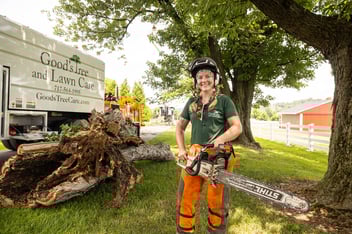
Next, call in a professional tree care company. ISA Certified arborists like the ones at Good’s understand South Central Pennsylvania trees inside and out and can safely remove or repair your storm damaged tree and safeguard it against future damage.
Common Signs of Severe Tree Damage from Storms
From quiet hints to blaring warnings, tree damage can manifest in several ways. Let’s take a look at some of the signs you should look out for.
Leaning Trees
If you notice that a tree exhibits a new tendency to lean, that may be a sign of some structural damage. Another clue to watch for is if two trees are touching or leaning against each other.
Partial Uprooting
A large portion of a trees’ roots spread out around the tree in the top 12 to 15 inches of soil. In some instances, this root plate will lift, and you will see a bulge coming out of the ground.
In these cases, the tree can likely not be saved, and it’s important to safely remove the tree before it damages anything below.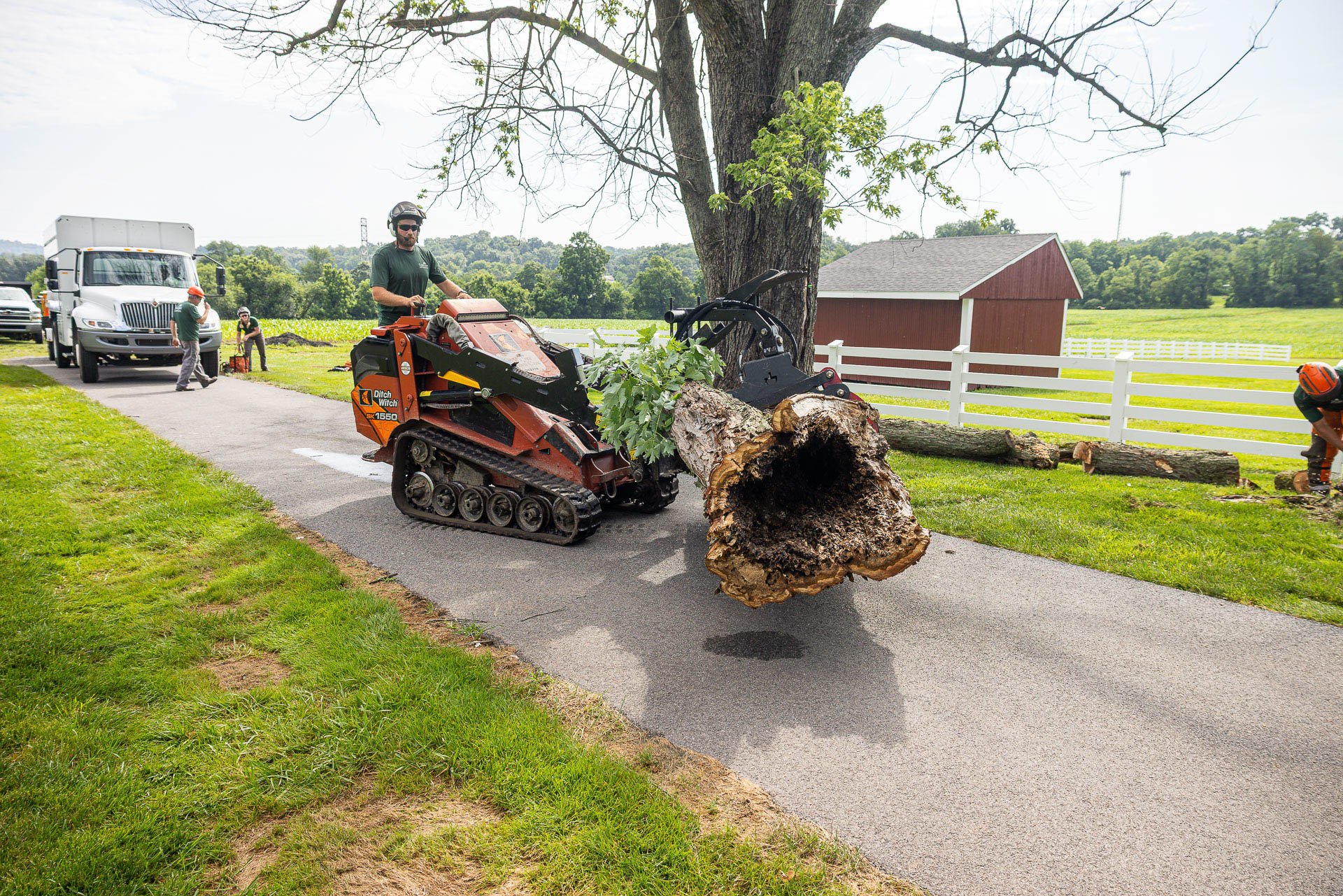
Cracks and Cavities
Emerging from high wind pressure and severe weather events, cracks and cavities within a tree can also be a sign that something deeper is going on.
How to Tell if a Storm-Damaged Tree Can be Saved
How do you know if the tree in your yard can be revived after seeing one of these signs?
In cases where the tree is already partially dead or rapidly declining, it’s best to remove it from your property to avoid future issues.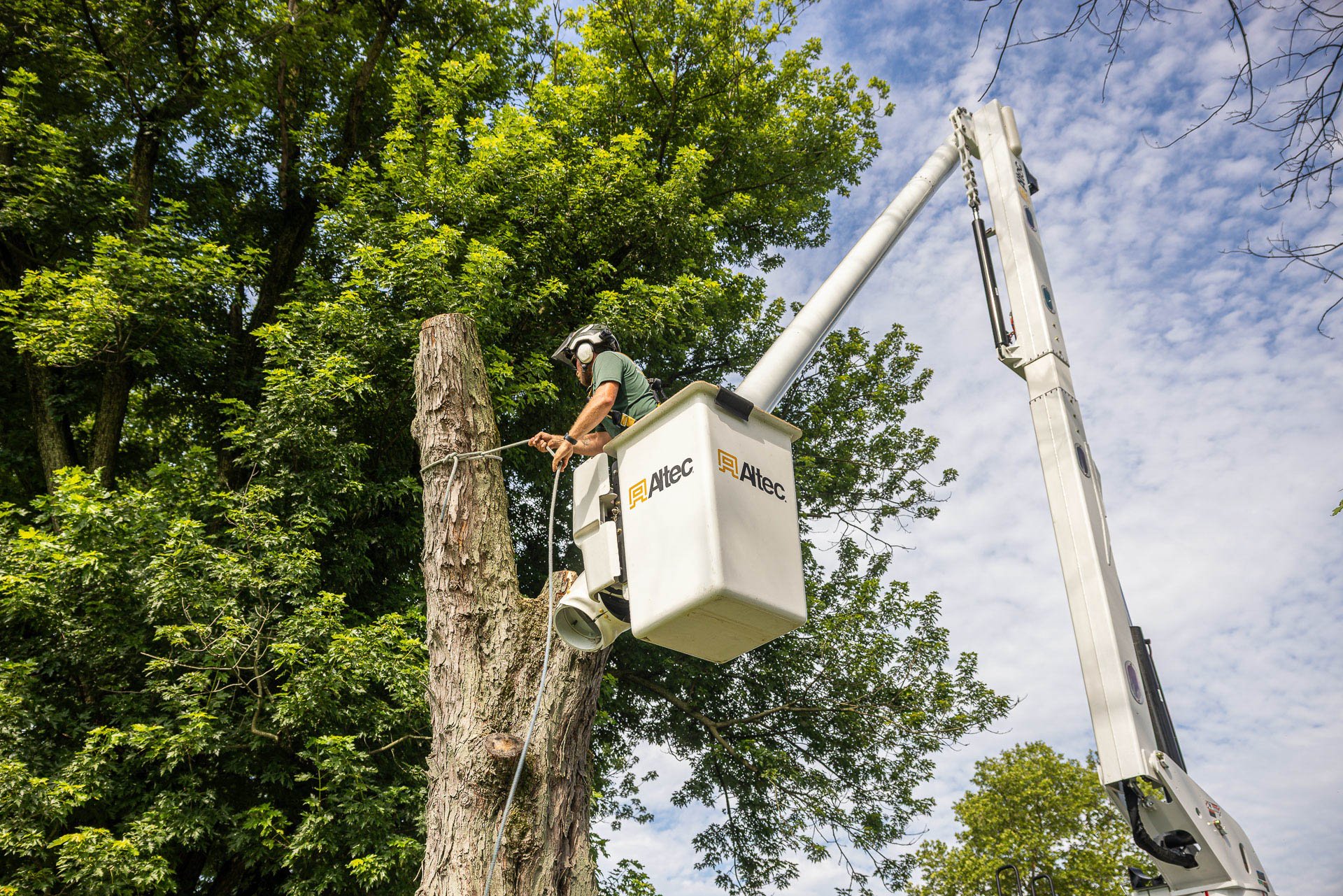
Similarly, if there’s any type of decay or fungus at the base of the tree, that can be an indication for root rot or buttress rot, another sign that it may be time to remove the tree.
If the tree is generally in good health and still has solid structure, but with some damage to the canopy, it is possible to save it with some pruning.
Restoration Pruning
While you may think that a tree that has lost a good bulk of its canopy needs to be removed, that’s not necessarily the case.
In fact, we’ve seen trees that have lost one-third or more of their canopy ultimately be saved.
After the storm, an expert can step in to remove dead and broken tree branches and hanging limbs while also pruning the tree in such a way that it can recover and grow out again.
Keep in mind that this is not a one-step process, but over time even severely damaged trees can be restored.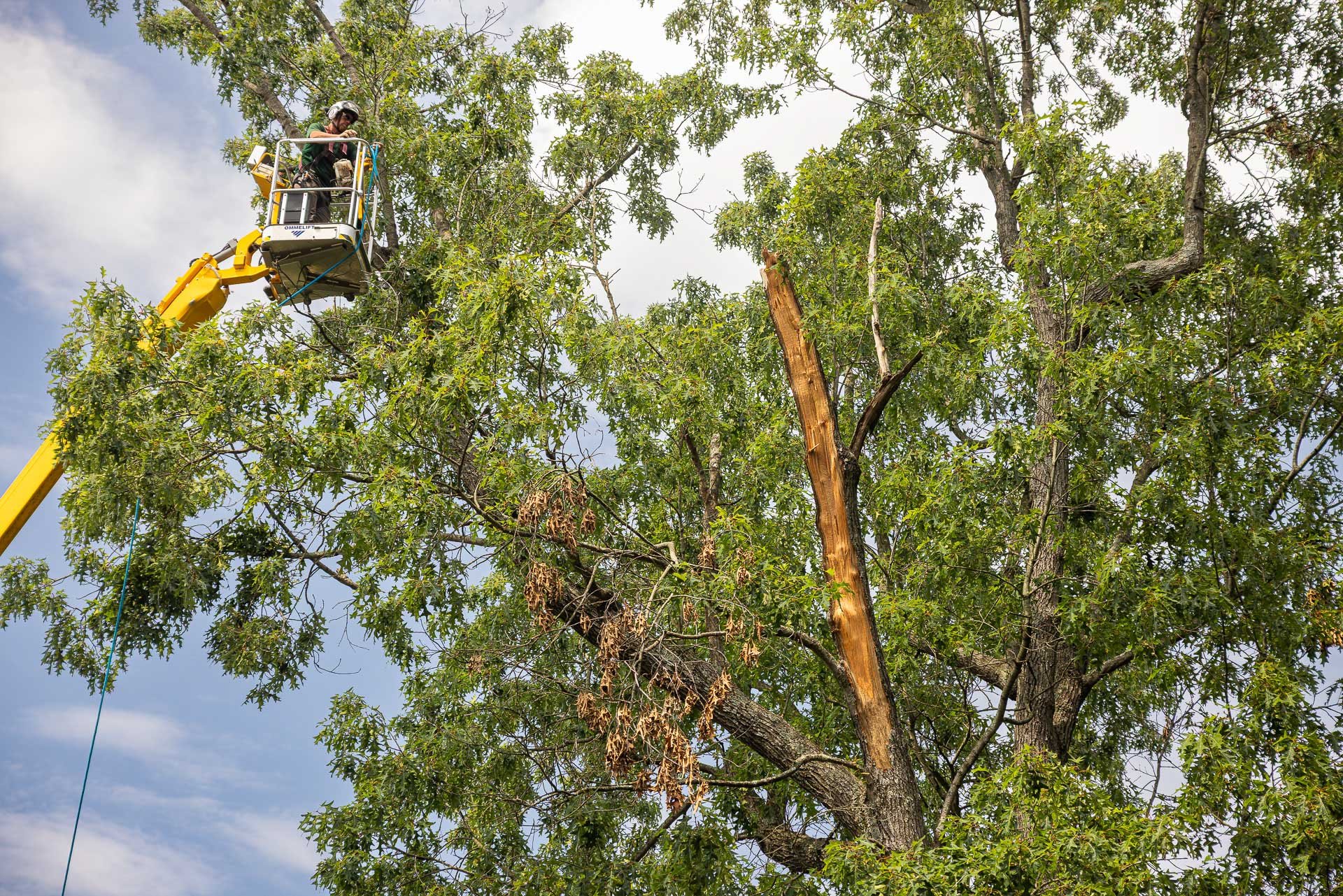
Now, let’s take a look at a few different ways regular tree care can save your trees from damage in future storms.
How Proactive Tree Care Can Help Reduce Future Risks
For the greater good of your trees, there are several ways trained and certified arborists can help.
It’s important to understand that prevention is key. Getting ahead of the storm can help curtail the consequences and ultimately prevent danger to people and damage to your property. We recommend proper, regular pruning methods to avoid major tree damage, such as pruning to:
- Improve branch structure
- Reduce end weight
- Lessen load potential on branches
- Selectively reduce limbs
At Good’s, our trained and certified arborists evaluate trees to identify defects that could become a liability in the event of strong winds or heavy snow and ice and from there decide on the best plan of action for your property.
Reduction Pruning
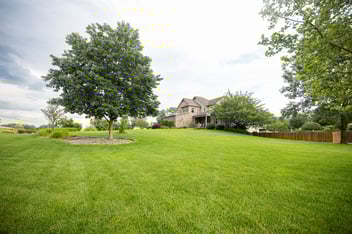
Trees growing in the middle of a yard are unlike trees found in the woods in that they are not surrounded by other trees. This means that they can grow in all directions, without competing with other trees for resources.
While this may seem like a good thing, this unrestricted growth can eventually lead to structural defects within the tree, which, as the tree continues to grow, become weak points that are prone to breaking.
To address this issue, arborists prune the trees for proper structure, so they exhibit strong attachment points and are not overloaded at their extremities. A preventative measure against storm damage, reduction pruning tends to be most effective for younger and medium-aged trees.
By implementing reduction pruning, trees have a better chance at survival if snow and ice burden the branches or if wind whips through them.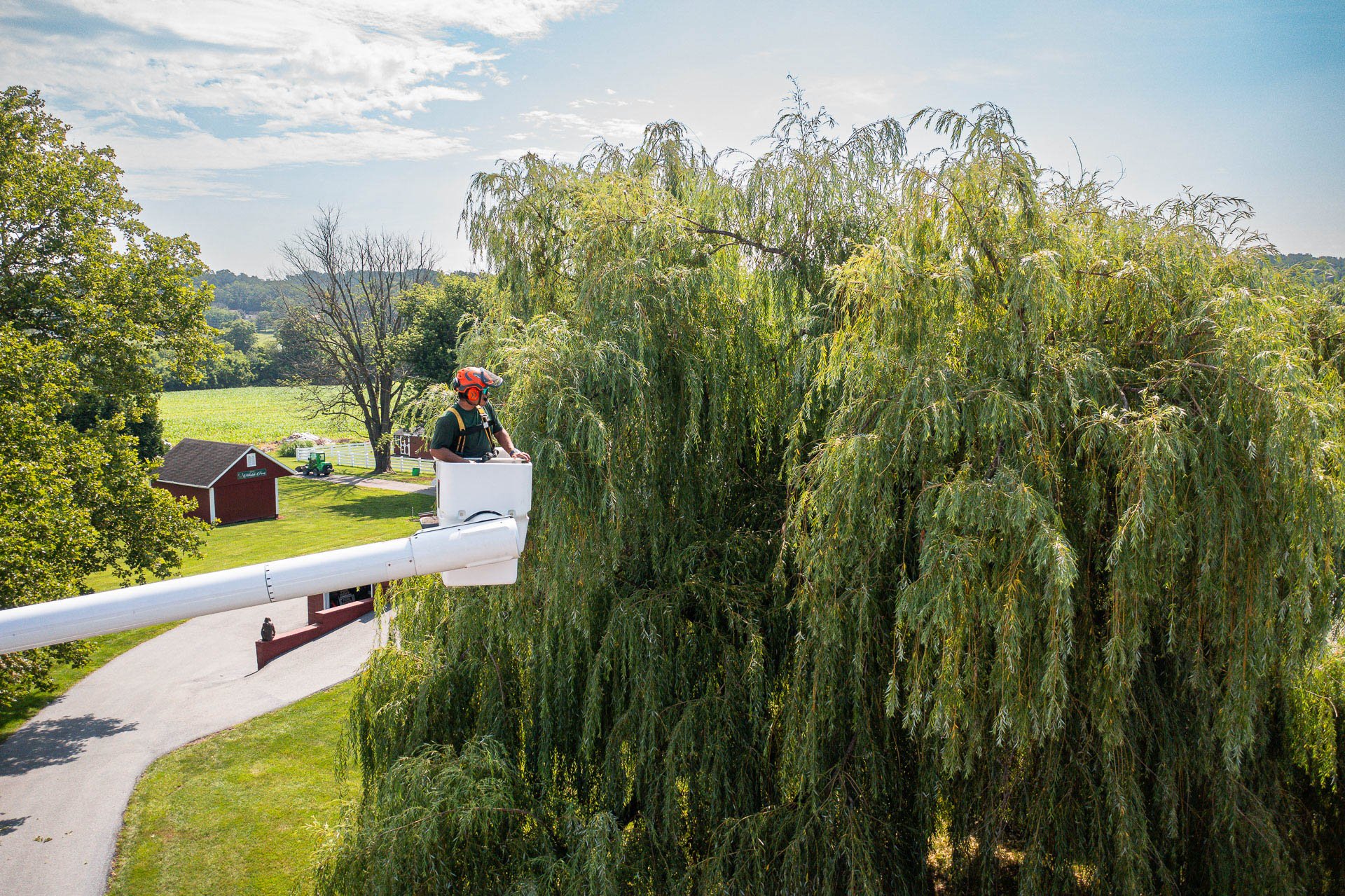
Tree Cabling and Bracing
Another preventative measure, tree cabling and bracing can assist with split or weak limbs, heavy-leaning limbs, storm-damaged limbs, and more.
If your tree is located near a structure or power line, or if you’ve had issues with limbs falling down in the past, tree cabling and bracing can give you peace of mind by providing your tree with extra support.
FAQs About Handling Storm Damaged Trees
Is storm damage covered by insurance?
After immediate steps have been taken concerning a storm damaged tree, you should plan to get in touch with your homeowner insurance agent. Different companies have different policies for what is and isn’t covered.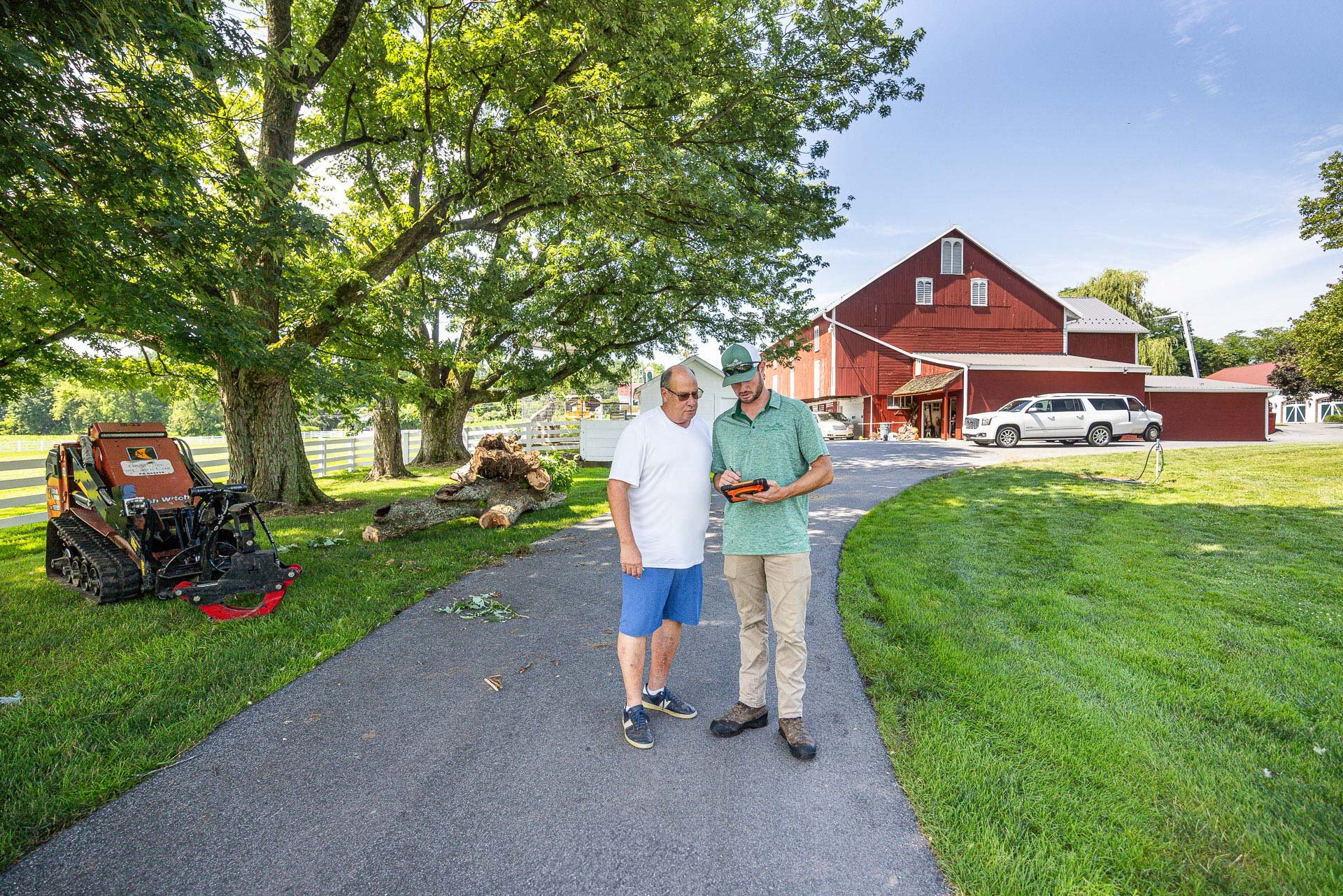
It may not be a bad idea to dig into your policy to understand what’s covered and take proactive measures if needed.
How are emergency tree removal services different?
Emergency tree removal involves a sense of urgency. As these services are prioritized and sometimes during off hours, there is typically a higher cost associated with them to get on the schedule.
Additionally, failing or compromised trees tend to be less predictable, meaning that they often require unique methods to handle them. In some cases, these removals need to be dealt with using heavy equipment such as cranes to keep our crews and surrounding property safe.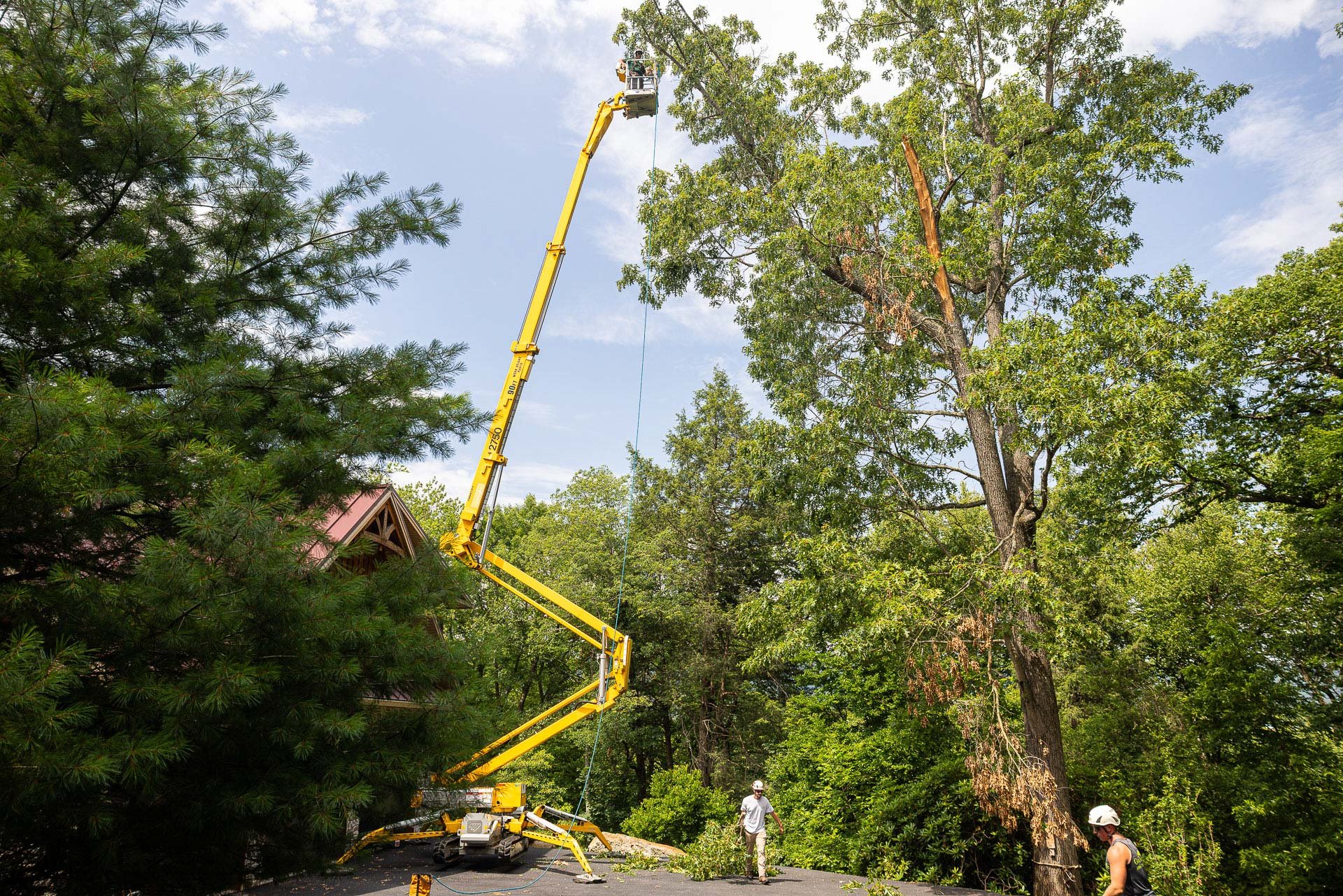
When is the most common time of year for tree damage in South Central PA?
Winter can be a very windy time of year in areas like Mechanicsburg, York, and Lancaster, but if the winds are not accompanied by snow and ice, we don’t tend to see a lot of damage on deciduous trees. This is because on deciduous trees, there’s not much wind resistance due to the lack of leaves, and if the tree sustains any damage, it’s usually only partial or smaller branches affected.
On the other hand, conifers like spruce or pine can sustain wind damage in the winter, even without snow and ice, because they keep their foliage all year.
Perhaps the most damaging time of year is in the summer during thunder storms. Trees are more prone to damage during this time because they are in full leaf and prime targets for heavy winds and lightning strikes that can take down limbs or entire trees.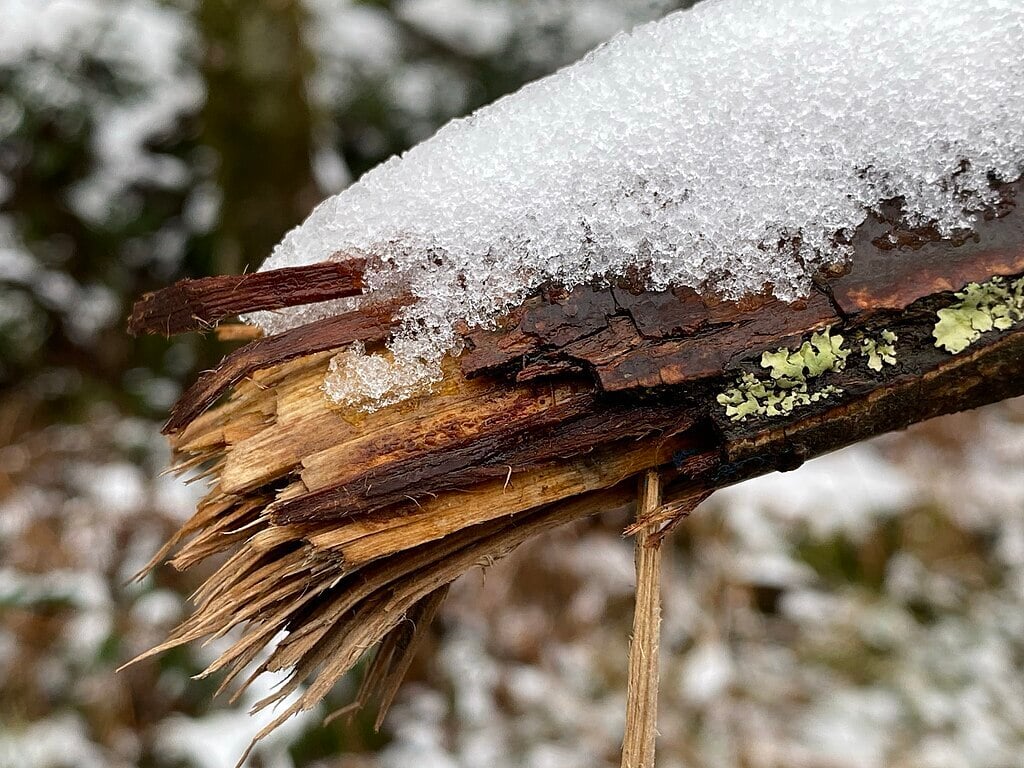
How Good’s Makes Caring for Storm-Damaged Trees Easy
At Good’s, we take the time to know you and every tree on your property.
That’s why our arborists can read the signs, predict weak spots, and stop small concerns from blowing up into storm-season disasters.
To help your trees brave the next storm that rips through communities in and around Lancaster, Lebanon, Harrisburg, and York, give us a call to schedule a consultation or get a free quote today.

Image Sources: fallen limb, snowy broken branch

Jon Schach

.png?width=300&height=143&name=Goods%20Tree%20Care%20Logo%202%20(2).png "Goods Tree Care Logo 2 (2)")